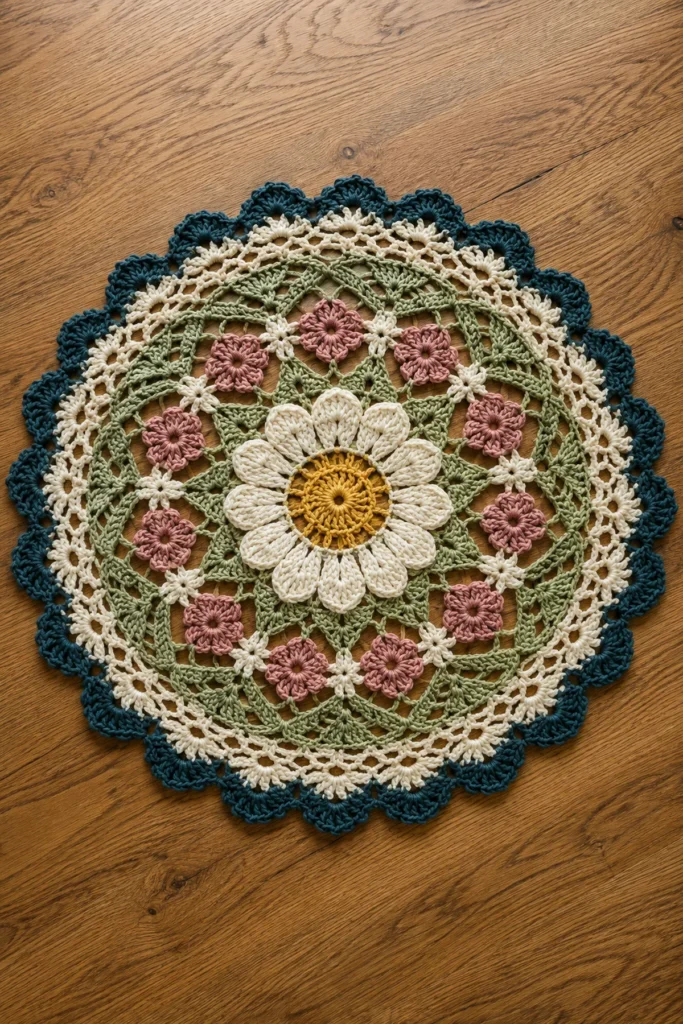
This crochet mandala table centerpiece pattern uses a distinct construction and seasonal palette created for Tenderecipe. Turn a bare table into a quiet focal point with a circular wildflower mandala worked from the center outward. Twelve measured increase points keep the fabric flat while color placement, spike stitches and a final shell edge create the look of layered petals and leaves without separate appliqués.
Project Overview
A twelve-round flat mandala with golden center, cream petals, dusty-rose floral accents, sage leaf arches and a deep-teal scalloped edge.
This design is mathematically checked but has not been physically sample-tested. Make and measure a swatch or first component, adjust for your yarn and tension, and review the finished draft before publication.
Pattern Details
- Skill Level: Intermediate
- Yarn Weight: DK
- Hook Size: 3.5 mm
- Finished Size: Approximately 18 in / 46 cm diameter after blocking
- Gauge: Rnds 1–4 measure about 4 in / 10 cm across after blocking
- Terminology: US
- Estimated Time: 8–12 hours
Materials
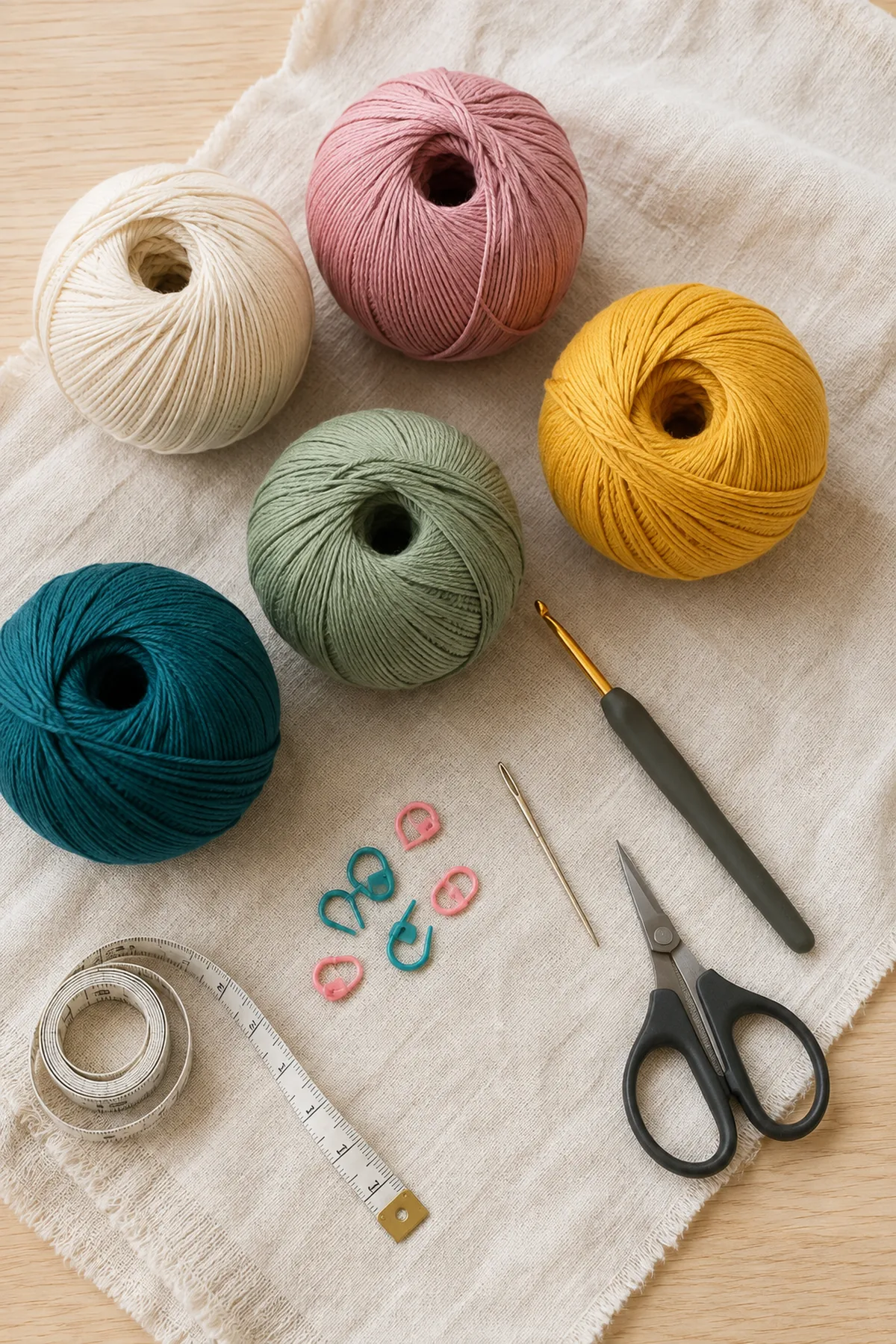
- About 500 yd / 460 m total DK mercerized cotton: 70 yd gold, 120 yd cream, 100 yd dusty rose, 100 yd sage and 110 yd deep teal
- 3.5 mm crochet hook, or size needed for a flat fabric
- Tapestry needle, scissors, 12 removable stitch markers, rustproof blocking pins and blocking mat
Abbreviations
- ch = chain
- sc = single crochet
- hdc = half double crochet
- dc = double crochet
- tr = treble crochet
- sl st = slip stitch
- st(s) = stitch(es)
- sc2tog = single crochet two together
Important Notes
- US terminology; chain 2 never counts as a stitch
- Join every round to the first double crochet and do not turn
- Move 12 markers to the increase stitch of each repeat
- If the circle cups, loosen tension or block lightly; if it ruffles, tighten tension before continuing
Round-by-Round Mandala
Rnd 1: With gold, make an adjustable ring. Ch 2, work 12 dc in the ring, pull closed and join to the first dc. (12 sts)
Rnd 2: Ch 2, work 2 dc in every stitch; join. (24 sts)
Rnd 3: Ch 2, repeat [dc in next stitch, 2 dc in next stitch] 12 times; join. (36 sts)
Rnd 4: Ch 2, repeat [dc in next 2 stitches, 2 dc in next stitch] 12 times; join with cream on the final pull-through. (48 sts)
Rnd 5: Ch 2, repeat [dc in next 3 stitches, 2 dc in next stitch] 12 times; join. (60 sts)
Rnd 6: Ch 2, repeat [dc in next 4 stitches, 2 dc in next stitch] 12 times; join with dusty rose. (72 sts)
Rnd 7: Ch 2, repeat [dc in next 5 stitches, 2 dc in next stitch] 12 times; join. For a petal accent, make every third ordinary dc as a long dc inserted into the top of Rnd 5; this still replaces one stitch and does not change the count. (84 sts)
Rnd 8: Ch 2, repeat [dc in next 6 stitches, 2 dc in next stitch] 12 times; join with sage. (96 sts)
Rnd 9: Ch 2, repeat [dc in next 7 stitches, 2 dc in next stitch] 12 times; join. Work the fourth dc of each repeat one round below for a leaf-vein accent, replacing the normal dc. (108 sts)
Rnd 10: Ch 2, repeat [dc in next 8 stitches, 2 dc in next stitch] 12 times; join with deep teal. (120 sts)
Rnd 11: Ch 2, repeat [dc in next 9 stitches, 2 dc in next stitch] 12 times; join. (132 sts)
Rnd 12: Ch 2, repeat [dc in next 10 stitches, 2 dc in next stitch] 12 times; join. (144 sts)
For the scalloped finish, without cutting teal, repeat [skip 2 stitches, 5 dc in next stitch, skip 2 stitches, slip stitch in next stitch] 24 times around. This decorative edge is worked after the audited 12-round body and does not replace the Rnd 12 count.
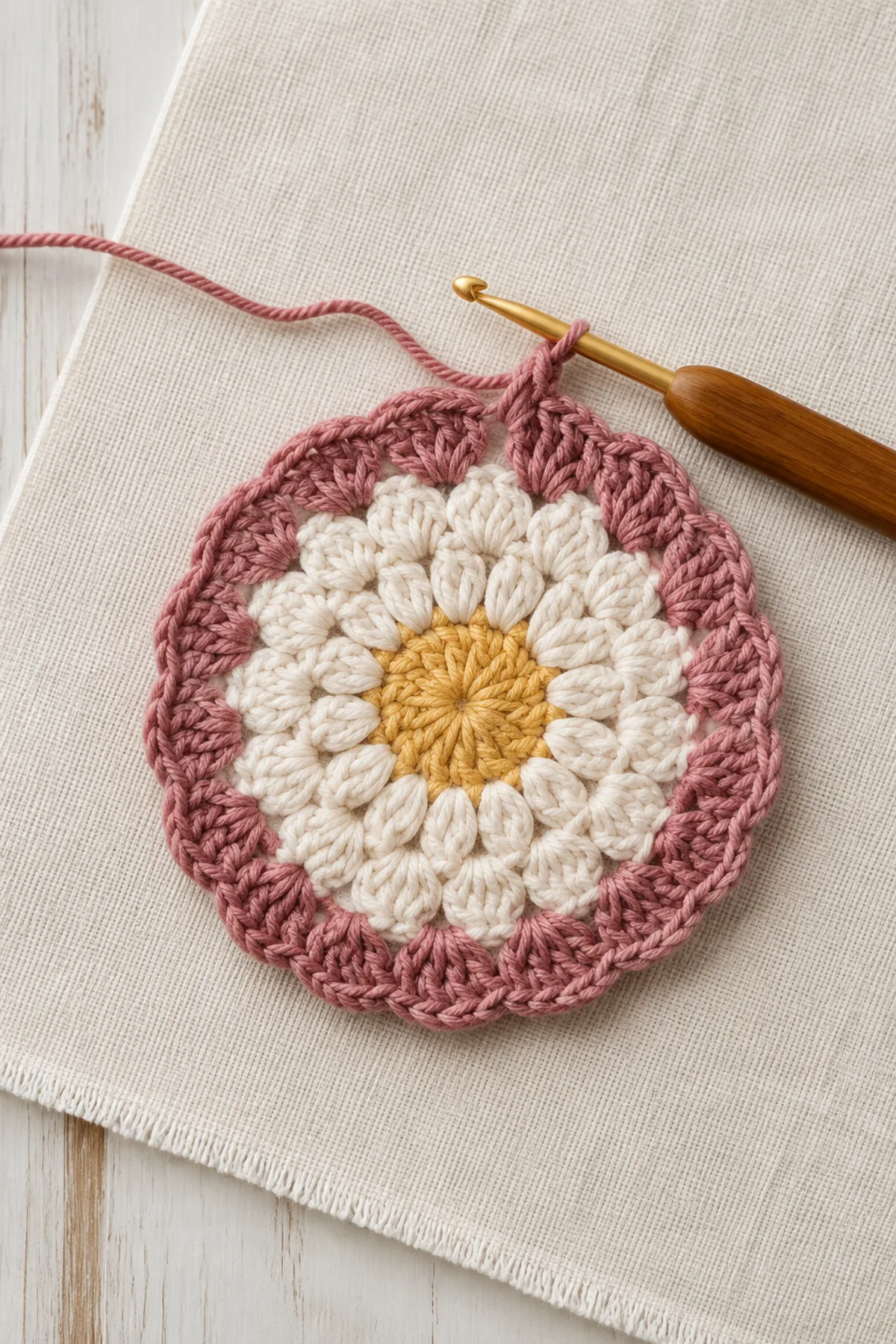
The early-stage image is a generated construction illustration. Use the written stitch counts as the working reference.
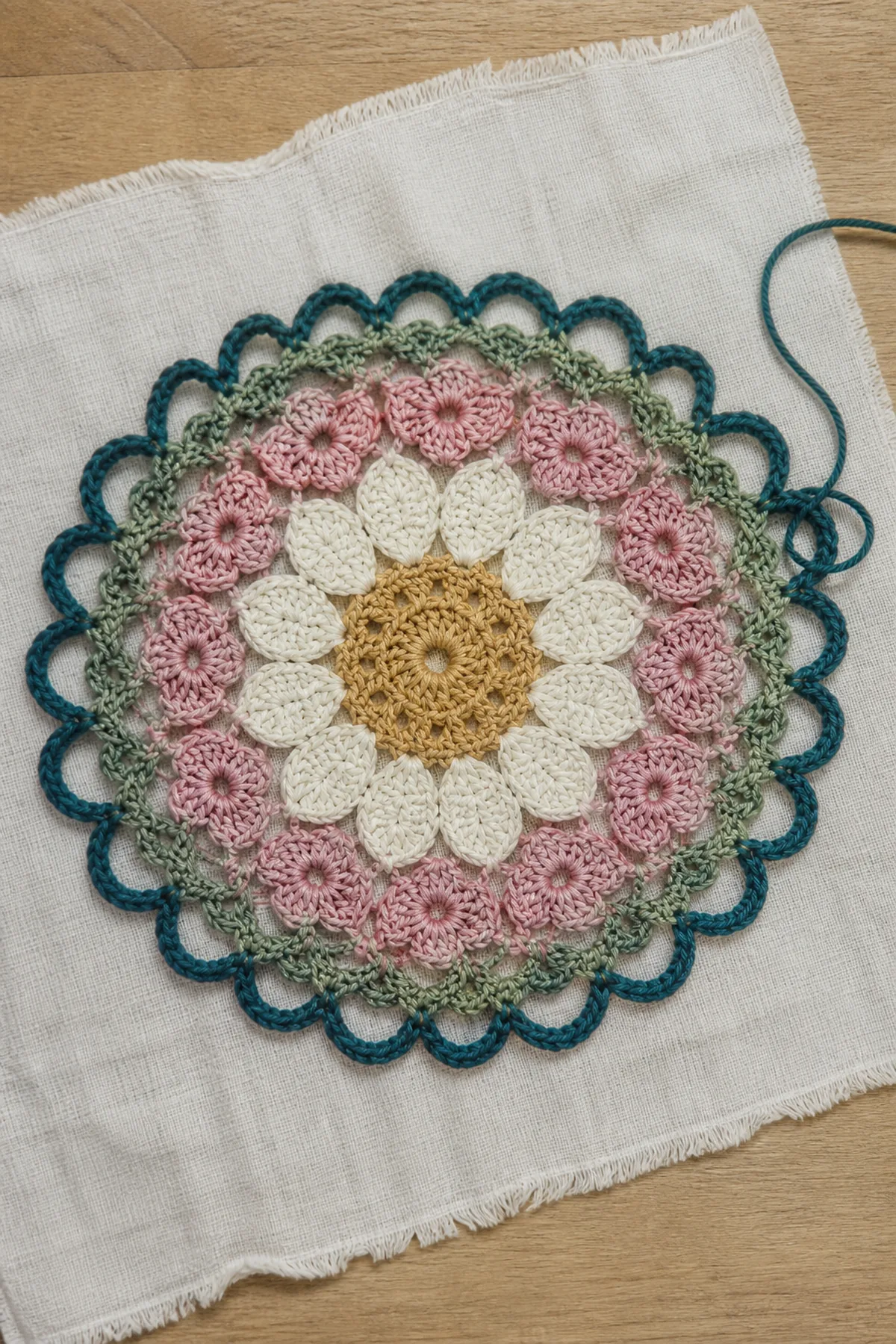
Finishing
Fasten off after the last shell. Weave each tail through at least 2 inches of same-color stitches, reverse direction, and trim. Soak briefly, roll in a towel, and pin the twelve marked spokes first. Ease the scallops into an 18-inch circle and dry completely. Use beneath cool, dry décor only; it is not a heat pad.
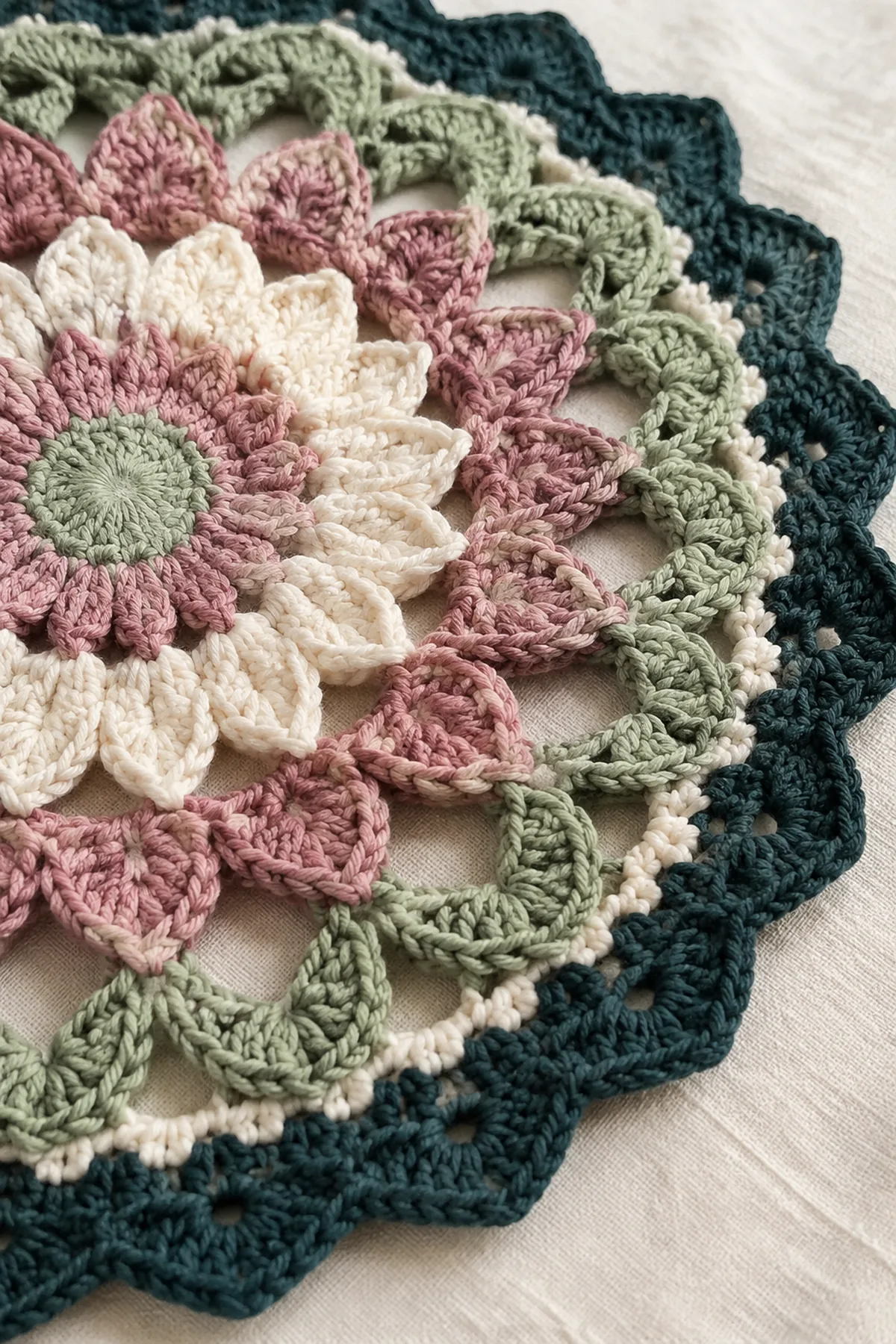
Customization Ideas
- Use one neutral yarn for a quiet lace-like centerpiece while retaining the marker placement
- Add color only at Rnds 4, 7, 9 and 12 for a restrained botanical rhythm
- Stop after any complete round for a smaller mat, then add a simple single-crochet edge instead of the shells
Care and Display
Follow the yarn label, test saturated colors for transfer and dry the piece in its intended shape. Keep decorative crochet away from flame, hot bulbs, moisture and snagging hardware. Inspect hanging loops and sewn details before each seasonal display.
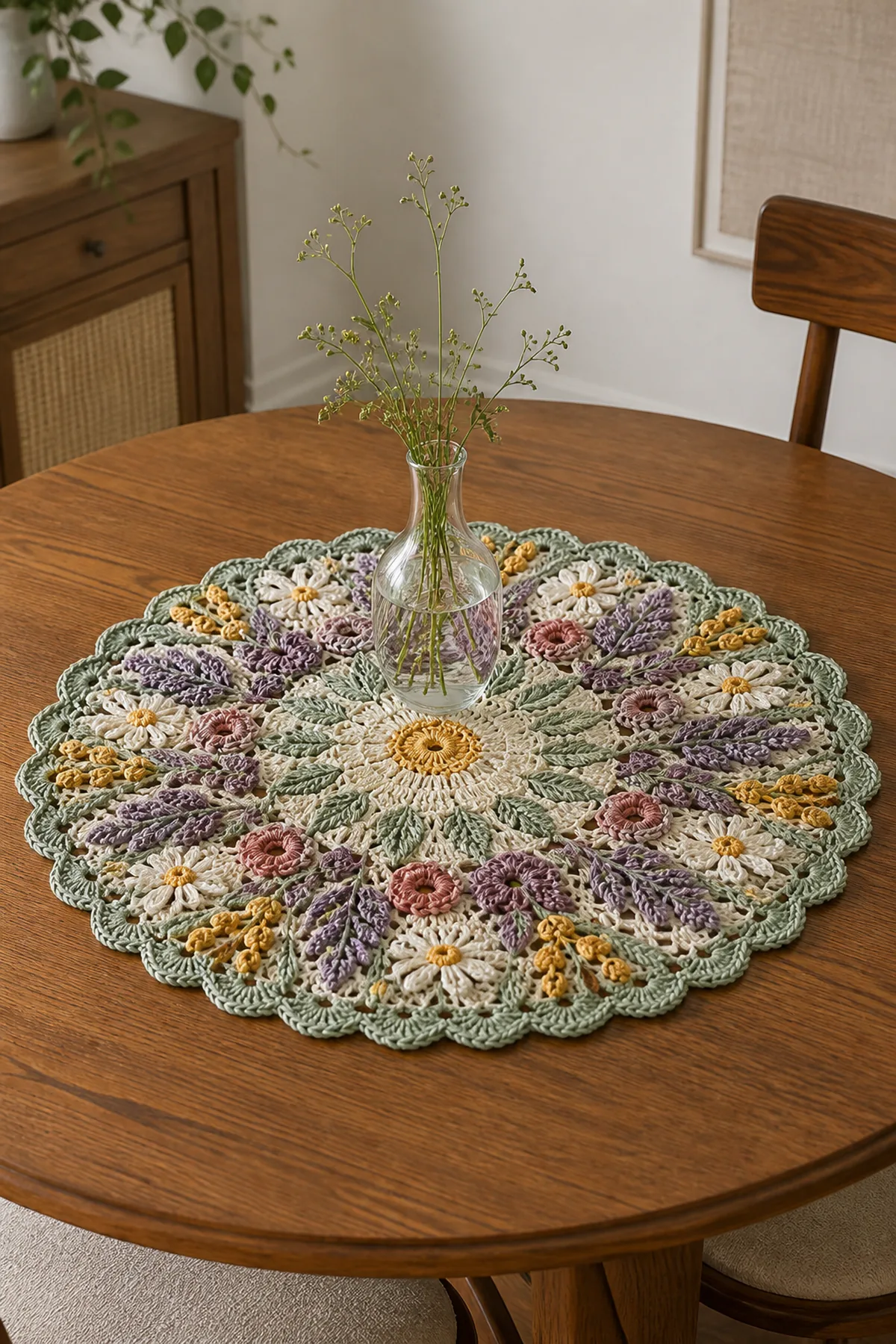
Troubleshooting
- Count at the end of every row or round and correct the first mismatch immediately.
- If the fabric twists unexpectedly, confirm the foundation orientation and the marked first stitch before continuing.
- When a join puckers, remove the stitches and resew with relaxed, even tension rather than stretching the finished fabric.
Frequently Asked Questions
Why is my mandala cupping?
The round may be too tight for your yarn. Check the diameter after Rnd 4, loosen your tension or move up a hook size, then continue only when the piece rests flat.
Can I use worsted yarn?
Yes, but the centerpiece will be larger and heavier. Swatch through Rnd 4 and choose a hook that keeps the circle flat.
Can I place hot cookware on it?
No. This decorative cotton centerpiece is not tested or rated as a trivet.
Before You Finish
Compare the completed piece with the measurements and construction notes, photograph any adjustment and record it before making another. Because this is an untested draft, physically sample and review the project before public release.