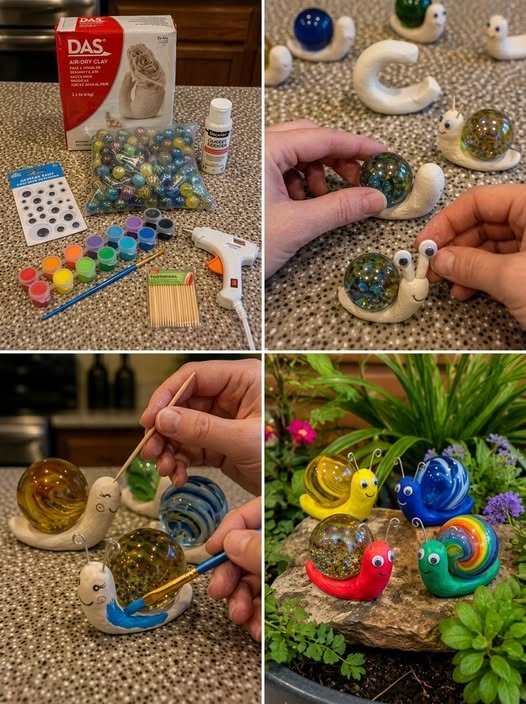
If you’re looking for a fun, budget-friendly craft that adds a whimsical touch to your outdoor space, DIY marble snail garden decorations are exactly what you need. These charming little creatures combine the natural beauty of glass marbles with the creative freedom of air-dry clay, resulting in colorful, eye-catching garden ornaments that work beautifully in flower pots, fairy gardens, and along garden pathways. Whether you’re an experienced crafter or a complete beginner, this project is simple enough for all skill levels and endlessly customizable to match your garden’s personality.
In this complete guide, you’ll learn everything you need to know about making marble snail garden decor — from the materials you’ll need and step-by-step instructions to creative design variations, helpful tips, and ideas for displaying your finished snails. Let’s dive in!
Why Marble Snail Garden Decorations Are the Perfect DIY Project
Garden crafts have surged in popularity in recent years, and for good reason. Creating your own garden decor allows you to personalize your outdoor space in a way that store-bought items simply can’t match. But not all DIY garden projects are created equal. Some require expensive tools, complex techniques, or materials that are hard to find. Marble snail decorations, on the other hand, check all the right boxes:
They’re affordable. Glass marbles are inexpensive and widely available at craft stores, dollar stores, and online. Air-dry clay costs just a few dollars per pack, and the rest of the supplies — paint, glue, googly eyes — are common craft staples you may already have at home.
They’re beginner-friendly. No sculpting experience is needed. The snail body is a simple curved shape, and the marble does most of the visual heavy lifting by acting as the shell.
They’re kid-friendly. This is a fantastic craft to do with children. It’s tactile, colorful, and produces an immediately satisfying result. Kids love painting the marbles and sticking on the googly eyes.
They’re durable (with the right finish). When sealed with outdoor varnish, these little snails can withstand rain, sun, and seasonal changes, making them a long-lasting addition to your garden.
They’re endlessly creative. From rainbow swirls to galaxy themes, ladybug patterns to ocean motifs, there’s no limit to the designs you can create.
Materials You’ll Need for DIY Marble Snail Garden Decor
Before you get started, gather the following supplies:
- Glass marbles – You’ll want a mix of large marbles (for the shell) and small marbles (for accent pieces or smaller snails). Rainbow, iridescent, or swirled marbles create especially magical effects. Smooth stones can also work as an alternative if marbles aren’t available.
- Air-dry clay or polymer clay – Air-dry clay is the easier option for beginners and doesn’t require an oven. Polymer clay (like Sculpey or Fimo) requires baking but produces a stronger, more durable result.
- Acrylic paint – Choose bright, vivid colors for maximum visual impact in the garden. Acrylic paint adheres well to both clay and glass.
- Paintbrushes – A variety of brush sizes is helpful. Fine-tipped brushes are essential for details like swirl lines, dots, and facial features.
- Hot glue gun – For securing the marble shell to the clay body. A strong bond is important, especially if the snail will be placed outdoors.
- Clear varnish or outdoor sealant – Highly recommended for garden-placed snails. It protects the paint from fading and the clay from moisture damage.
- Googly eyes or small beads – These give your snail its personality. Googly eyes add a playful, cartoonish look; small black beads create a more refined appearance.
- Toothpick – An indispensable sculpting tool for etching fine details into the clay before it dries.
Optional extras include glitter paint, metallic acrylic paint, sequins, small pebbles for texture, and tiny decorative elements like miniature flowers or stars.
Step-by-Step Instructions: How to Make Marble Snail Garden Decor
Step 1: Create the Snail Body
Take a piece of air-dry clay and roll it into a smooth, even log shape. Then gently curve it into a “C” shape — this is your snail’s body. The head end should be slightly thicker to allow room for attaching the eyes and sculpting facial details. The tail end can taper to a gentle point.
Make sure the body is proportional to the marble you’ll be using as a shell. A large marble needs a slightly larger body; a small marble works best with a more delicate, petite body.
Place the C-shaped body on a flat surface and press it down gently so it sits stably without rolling. This flat base will help the snail stand upright in your garden.
Step 2: Attach the Marble Shell
While the clay is still soft and pliable, gently press the glass marble onto the back of the snail’s body. The marble should sit snugly in the curve where the body arches — like a real snail carrying its home on its back.
Press the clay up around the bottom edge of the marble slightly to create a natural “cradle” that holds the marble in place. If the clay doesn’t grip the marble firmly on its own, use a small amount of hot glue to reinforce the bond. For polymer clay users, be sure to glue after baking, as the glue won’t withstand oven temperatures.
Step 3: Add the Face
Before the clay dries, sculpt two small clay stalks (antennae) on top of the snail’s head. Roll two tiny balls of clay and attach them to the tops of the stalks — these will hold the googly eyes or beads.
Press googly eyes or small beads onto the clay balls while still soft. If using beads, they can be pushed directly into the clay. If using googly eyes, attach them with a small drop of glue after the clay has dried.
Step 4: Sculpt the Details
Now comes the fun part — bringing your snail to life with surface details. Using a toothpick, gently etch into the clay:
- A small curved smile on the front of the head
- Tiny lines or dots along the body to suggest texture or segmentation
- A subtle swirl on the surface of the clay body where it meets the marble, mimicking shell patterns
- Eyelashes, eyebrows, or other expressive features if you want a more characterful snail
Work slowly and with light pressure — clay is easy to accidentally deform if you press too hard.
Step 5: Let It Dry
This step requires patience. Air-dry clay typically takes 24–72 hours to fully harden, depending on the thickness of the clay and the humidity in your environment. Place your snails on a clean, dry surface away from direct sunlight or heat sources, which can cause the clay to crack.
Do not try to rush the drying process. Clay that isn’t fully dry may crack, warp, or lose its shape during painting.
If you’re using polymer clay, follow the manufacturer’s instructions for baking temperature and time — typically 130°C (275°F) for 15–30 minutes depending on thickness.
Step 6: Paint Your Snail
Once the clay is fully hardened, it’s time to paint. Start with a base coat over the entire clay body — a solid color like bright green, sky blue, sunshine yellow, or coral pink works well as a foundation. Let this dry completely before adding details.
For the marble shell, use a fine paintbrush to add decorative patterns. Some popular options include:
- Rainbow swirls – Using multiple colors, paint curving swirl lines outward from the center of the marble’s face
- Polka dots – Simple but effective; use the tip of a toothpick dipped in paint to create perfect tiny dots
- Geometric patterns – Hexagons, triangles, or chevron stripes give a modern, graphic look
- Nature-inspired designs – Floral motifs, leaves, or butterfly wing patterns blend beautifully with garden settings
- Galaxy theme – Blend deep purple, navy, and black with tiny white dots for a cosmic effect
Don’t forget to paint the snail’s face! Add rosy cheeks, paint the pupils of the googly eyes, or give your snail a little blush.
Step 7: Seal the Finished Snail (Highly Recommended)
If your snails will live outdoors, apply at least two coats of clear outdoor varnish or a weather-resistant sealant. This step protects the paint from UV fading, seals the clay against moisture, and gives your snails a beautiful glossy finish that makes the marble shell sparkle.
Apply the sealant with a soft brush, covering all surfaces including the marble, clay body, and the underside. Allow each coat to dry fully before applying the next.
Step 8: Place Your Snails in the Garden
The final step is the most rewarding — finding the perfect home for your new garden residents. Here are some ideas:
- Nestle them among the roots of potted plants for a hidden surprise effect
- Line them along the edge of a garden bed or pathway
- Arrange a family of different-sized snails in a cluster near a garden feature
- Place them in a fairy garden setup with miniature accessories
- Perch them on top of garden rocks or along the rim of a birdbath
Creative Design Variations: Themes for Your Marble Snails
One of the best things about this craft is how versatile it is. Here are some themed ideas to inspire your creativity:
Ladybug Snail
Paint the marble shell bright red with black spots. Give the snail body a red or black color, and add a cheerful expression. Perfect for a classic, cottage-garden aesthetic.
Ocean Snail
Use ocean-inspired colors — turquoise, seafoam green, sandy beige. Paint the marble with wave patterns or fish scale designs. Add tiny bead “bubbles” near the head for a whimsical underwater feel.
Galaxy Snail
Paint the body in deep purple or midnight blue. Decorate the marble with swirling cosmic patterns using navy, purple, black, and white, with tiny gold dots for stars. Apply a coat of glitter sealant for extra sparkle.
Rainbow Snail
Use a different color of the rainbow for each section of the clay body, and paint the marble with all seven rainbow colors spiraling outward. Ideal for fairy gardens and children’s spaces.
Floral Snail
Paint delicate flowers — daisies, roses, sunflowers — on both the marble and the clay body. Use a cream or sage green base color for a fresh, botanical feel.
Glow-in-the-Dark Snail
Use glow-in-the-dark acrylic paint for the details. During the day they look normal; at night, they illuminate your garden with a soft, magical glow.
Expert Tips for the Best Results
Choose the right marble size. A marble that’s too large will make the snail top-heavy and unstable. A marble that’s too small won’t look like a shell. Test the size against your clay body before committing to the glue.
Keep a cup of water nearby. Wetting your fingers slightly while working with air-dry clay prevents cracking and helps smooth the surface.
Use rainbow marbles for a built-in magical effect. The swirling colors inside a quality glass marble mean you barely need to paint the shell at all — just a coat of varnish brings out the natural beauty.
Make a snail family. Using different sizes of marbles and different amounts of clay, create a range of snails from tiny to large. Group them together for a charming garden community.
Add glitter paint as a top coat. A layer of clear glitter paint over your finished snail adds a sparkly, fantasy-inspired look that catches the light beautifully.
Protect against frost. While varnished snails can handle rain, they may crack in hard frost. Bring them indoors or store in a sheltered location during winter months.
Use strong adhesive. For long-term outdoor display, consider using a waterproof epoxy adhesive instead of hot glue to attach the marble to the clay body.
Displaying Your Marble Snails: Ideas for Every Garden Style
Cottage garden: Tuck snails among sprawling roses, lavender, and foxgloves. Their colorful shells echo the vibrant palette of cottage planting.
Modern minimalist garden: Use a monochrome color palette — all-white snails with silver detail, or matte black with gold accents — for a sophisticated, contemporary look.
Children’s garden: Go bold and bright. Rainbow snails, funny faces, and glow-in-the-dark versions transform a child’s garden patch into an enchanted landscape.
Fairy garden: Marble snails are practically made for fairy gardens. Scale them to fairy size, use them as “residents,” and pair them with miniature houses, tiny bridges, and moss pathways.
Container garden: Line the rim of a large terracotta pot with a row of snails, or nestle one beside each plant in a planter. They protect nothing but brighten everything.
Rock garden: Place snails on or between decorative rocks. The natural stone backdrop makes the colorful marbles pop beautifully.
Frequently Asked Questions About DIY Marble Snail Garden Decor
Can children make these? Absolutely. The main step to supervise carefully is the use of the hot glue gun, which should be handled by an adult. The clay shaping, painting, and eye-sticking are all perfectly suitable for children aged 4 and up.
How long do they last outdoors? With a good sealant, marble snails can last several years outdoors. The marble itself is virtually indestructible. The clay body may show wear over time if it wasn’t fully sealed, so re-applying sealant annually can extend their life significantly.
Can I use regular stones instead of marbles? Yes! Smooth, rounded stones work beautifully as shells. Look for stones with interesting natural colors or patterns. River stones and sea glass are particularly charming options.
What if my clay cracks while drying? Minor cracks can be filled with a small amount of fresh clay or air-dry clay filler. Sand smooth once dry and repaint. To prevent cracking, dry clay slowly away from heat sources and direct sunlight.
Can I use Sculpey polymer clay instead of air-dry clay? Yes, and polymer clay actually produces a stronger, more durable result. The process is the same, except you’ll bake the body in the oven before painting. Attach the marble with glue after baking, not before.
Final Thoughts
DIY marble snail garden decor is one of those rare crafts that’s simple enough for beginners yet open-ended enough to engage experienced crafters for hours. With minimal materials, modest effort, and a little creativity, you can populate your garden with an entire cast of charming snail characters — each one unique, each one adding a burst of color and personality to your outdoor space.
Whether you’re making them as a personal garden project, a gift for a fellow garden lover, or a fun activity to enjoy with kids, these little marble snails are guaranteed to bring smiles. The only limit is your imagination. Start with one, and don’t be surprised if you find yourself building an entire snail village by the end of the weekend.
Happy crafting — and happy gardening! 🐌