Introduction to Water Cycle in a Bag (Window Experiment)
Creativity can be a wonderful escape, especially for busy moms and professionals looking to engage their children in educational activities. The “Water Cycle in a Bag” is a delightful DIY project that not only sparks creativity but also teaches kids about the fascinating process of the water cycle. This hands-on experiment is perfect for a sunny day and can be done right at home, making it an ideal choice for families eager to learn while having fun. In just a few simple steps, you can create a visual representation of evaporation, condensation, and precipitation that will captivate your child’s imagination.
Why You’ll Love This Water Cycle in a Bag (Window Experiment)
The “Water Cycle in a Bag” is a fantastic way to combine creativity with education. This project is not only affordable but also incredibly simple to execute, making it perfect for busy schedules. With minimal materials and a short preparation time, you can easily introduce your children to scientific concepts while enjoying quality time together. Plus, the visual aspect of the experiment keeps kids engaged and excited about learning!
Materials Needed for Water Cycle in a Bag (Window Experiment)
To get started on your “Water Cycle in a Bag” project, gather the following materials:
- Ziplock bags (1 per child): These will hold the water and create a mini ecosystem.
- Water (1/2 cup): The main component that will demonstrate the water cycle.
- Blue food coloring (optional): Adds a fun visual element to the water.
- Permanent markers: For decorating the bag with sun and cloud illustrations.
For a printable full list of materials, see below.
Tools Required for Water Cycle in a Bag (Window Experiment)
You will need a couple of basic tools to complete the “Water Cycle in a Bag” project:
- Scissors: To cut any necessary materials, if needed.
- Ruler: Optional, but can help in measuring if you want to create specific designs on the bag.
How to Make Water Cycle in a Bag (Window Experiment)
Follow these simple steps to create your “Water Cycle in a Bag”:
- Fill the Ziplock bag with 1/2 cup of water.
- Add a few drops of blue food coloring if desired, to make the water more visually appealing.
- Seal the bag tightly, ensuring no air is trapped inside to prevent leaks.
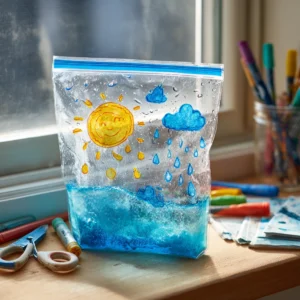
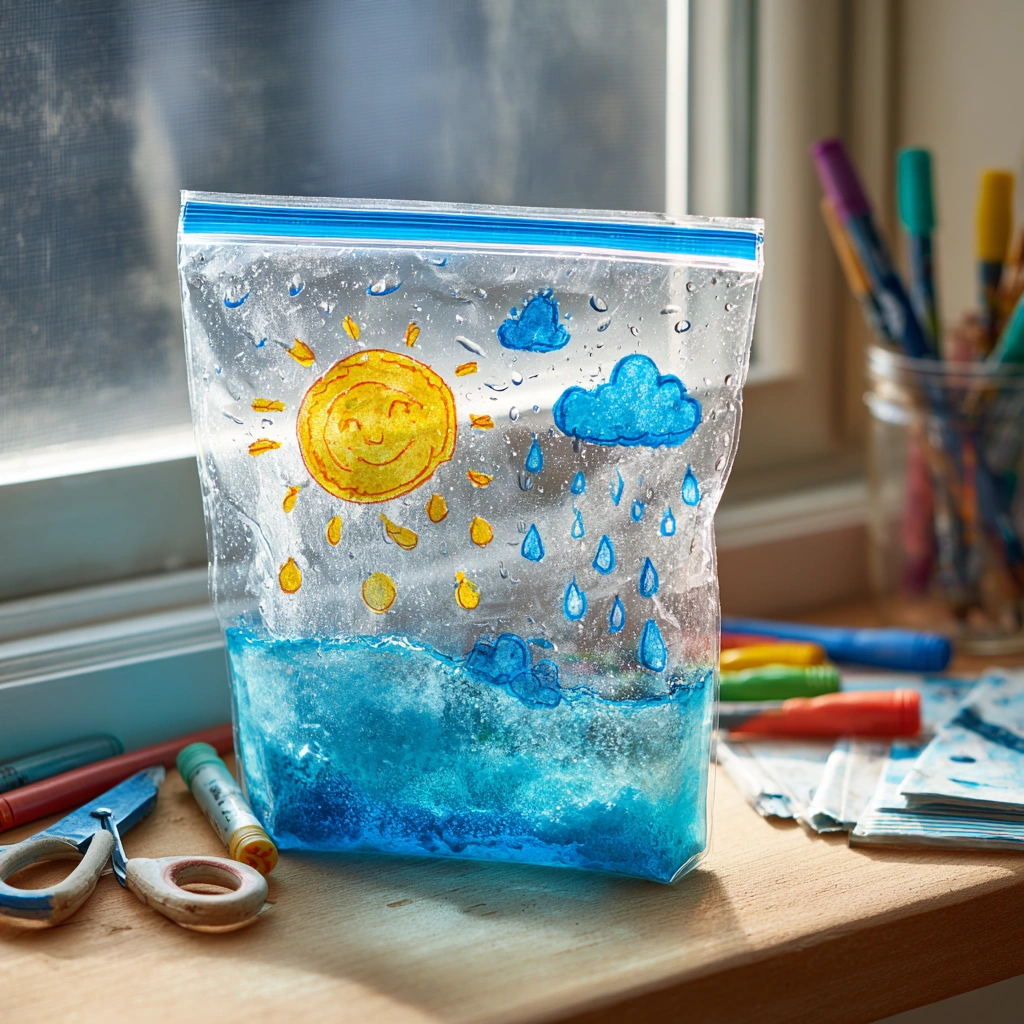
- Use permanent markers to draw the sun and clouds on the front of the bag, making it look like a mini weather scene.
- Attach the bag to a sunny window using tape, ensuring it is secure.
- Observe the changes over the next few days as the water evaporates, condenses, and eventually ‘rains’ back down inside the bag.
Tips for Best Results
To ensure your “Water Cycle in a Bag” project is a success, consider these practical tips:
- Make sure the bag is sealed properly to avoid leaks.
- Place the bag in a location that receives direct sunlight for the best results.
- Encourage kids to keep a journal of their observations, noting any changes they see.
Project Variations
Get creative with your “Water Cycle in a Bag” project by trying out these variations:
- Style Variations: Use different colors of food coloring to represent different weather conditions.
- Color Changes: Experiment with adding glitter or small foam shapes to represent clouds or raindrops.
- Seasonal Adaptations: Create a winter-themed bag with snowflakes or a summer-themed bag with bright sun drawings.
Decoration and Usage Ideas
Once your “Water Cycle in a Bag” is complete, here are some fun ways to use and display your project:
- Display in a sunny window to observe the water cycle in action.
- Use as a teaching tool to explain the water cycle to friends or family.
- Incorporate into a science fair project or school presentation.
FAQs about Water Cycle in a Bag (Window Experiment)
Q: How long does it take to see results?
A: You can start to see changes within a few hours, but the full cycle may take several days.
Q: Can I use other types of bags?
A: Ziplock bags work best, but any clear plastic bag can be used as long as it seals well.
Q: Is this project safe for young children?
A: Yes, but adult supervision is recommended, especially when using scissors.
Final Thoughts
The “Water Cycle in a Bag” is more than just a fun DIY project; it’s an opportunity to bond with your children while teaching them about the wonders of nature. This simple experiment can ignite a passion for science and creativity, making learning enjoyable. So gather your materials, set aside some time, and embark on this educational adventure together. You’ll create lasting memories and inspire a love for learning that will last a lifetime!
Why You’ll Love This Water Cycle in a Bag (Window Experiment)
The “Water Cycle in a Bag” is a fantastic way to combine creativity with education. This project is not only affordable but also incredibly simple to execute, making it perfect for busy schedules. With minimal materials and a short preparation time, you can easily introduce your children to scientific concepts while enjoying quality time together. Plus, the visual aspect of the experiment keeps kids engaged and excited about learning!
I remember the first time I did this project with my kids. We were all a bit skeptical at first, but as we watched the water slowly evaporate and then condense on the bag, their eyes lit up with wonder. It was a beautiful moment that reminded me of the joy of learning through hands-on experiences. The best part? It didn’t take much time out of our day, and we were able to fit it into our busy schedule without any stress.
As a busy mom, I know how challenging it can be to find activities that are both educational and entertaining. This project checks all the boxes! It’s a great way to spark curiosity about nature and science, and it encourages kids to ask questions and explore further. Plus, it’s a wonderful opportunity to bond with your children, creating memories that will last a lifetime.
So, if you’re looking for a fun and educational activity that fits into your hectic life, the “Water Cycle in a Bag” is the perfect choice. Let’s dive into the materials you’ll need to get started!
Why You’ll Love This Water Cycle in a Bag (Window Experiment)
The “Water Cycle in a Bag” is a fantastic way to combine creativity with education. This project is not only affordable but also incredibly simple to execute, making it perfect for busy schedules. With minimal materials and a short preparation time, you can easily introduce your children to scientific concepts while enjoying quality time together. Plus, the visual aspect of the experiment keeps kids engaged and excited about learning!
I remember the first time I did this project with my kids. We were all a bit skeptical at first, but as we watched the water slowly evaporate and then condense on the bag, their eyes lit up with wonder. It was a beautiful moment that reminded me of the joy of learning through hands-on experiences. The best part? It didn’t take much time out of our day, and we were able to fit it into our busy schedule without any stress.
As a busy mom, I know how challenging it can be to find activities that are both educational and entertaining. This project checks all the boxes! It’s a great way to spark curiosity about nature and science, and it encourages kids to ask questions and explore further. Plus, it’s a wonderful opportunity to bond with your children, creating memories that will last a lifetime.
So, if you’re looking for a fun and educational activity that fits into your hectic life, the “Water Cycle in a Bag” is the perfect choice. Let’s dive into the materials you’ll need to get started!
Materials Needed for Water Cycle in a Bag (Window Experiment)
To get started on your “Water Cycle in a Bag” project, gather the following materials:
- Ziplock bags (1 per child): These will hold the water and create a mini ecosystem.
- Water (1/2 cup): The main component that will demonstrate the water cycle.
- Blue food coloring (optional): Adds a fun visual element to the water.
- Permanent markers: For decorating the bag with sun and cloud illustrations.
For a printable full list of materials, see below.
Tools Required for Water Cycle in a Bag (Window Experiment)
You will need a couple of basic tools to complete the “Water Cycle in a Bag” project:
- Scissors: To cut any necessary materials, if needed. I always keep a pair of child-safe scissors handy for projects like this, as they make it easier for kids to participate without any worries.
- Ruler: Optional, but can help in measuring if you want to create specific designs on the bag. I find that using a ruler can add a fun element of precision, especially when drawing straight lines for the sun or clouds.
When I first attempted this project, I realized that having the right tools made all the difference. It’s amazing how a simple pair of scissors can empower kids to express their creativity. Plus, using a ruler can turn a casual craft into a mini art lesson, teaching them about measurements and symmetry.
As busy moms, we often juggle multiple tasks, and having these tools ready can streamline the process. I recommend setting everything out on the table before you start, so you can dive right into the fun without any interruptions. Trust me, it makes the experience smoother and more enjoyable for everyone involved!
How to Make Water Cycle in a Bag (Window Experiment)
Follow these simple steps to create your “Water Cycle in a Bag”:
- Fill the Ziplock bag with 1/2 cup of water. I like to use a measuring cup to ensure accuracy, which makes it easier for kids to understand measurements.
- Add a few drops of blue food coloring if desired, to make the water more visually appealing. This step is always a hit with my kids; they love watching the color swirl and mix!
- Seal the bag tightly, ensuring no air is trapped inside to prevent leaks. I often remind my kids to double-check the seal, as a little extra caution goes a long way in avoiding messes.
- Use permanent markers to draw the sun and clouds on the front of the bag, making it look like a mini weather scene. This is where creativity shines! I encourage my kids to personalize their designs, which adds a special touch to each bag.
- Attach the bag to a sunny window using tape, ensuring it is secure. I love watching their excitement as they find the perfect spot for their creation!
- Observe the changes over the next few days as the water evaporates, condenses, and eventually ‘rains’ back down inside the bag. This observation period is magical; it’s like having a little science lab right in our home!
As you embark on this project, remember that the journey is just as important as the destination. Each step is an opportunity for learning and bonding. I cherish the moments spent with my kids, discussing what we see happening in the bag. It’s a wonderful way to spark curiosity and encourage questions about the world around us!
Tips for Best Results
To ensure your “Water Cycle in a Bag” project is a success, consider these practical tips:
- Make sure the bag is sealed properly to avoid leaks. I can’t tell you how many times I’ve had to clean up a mess because I didn’t double-check the seal! A tight seal keeps the water contained and allows the experiment to work its magic.
- Place the bag in a location that receives direct sunlight for the best results. I’ve found that the more sunlight the bag gets, the more vibrant the colors become, and the quicker the water cycle process happens. It’s like watching nature unfold right before your eyes!
- Encourage kids to keep a journal of their observations, noting any changes they see. This not only enhances their learning experience but also helps them develop writing skills. I love seeing my kids excitedly jot down their thoughts and drawings, turning this simple project into a mini science report!
These tips have made a world of difference in my crafting adventures. I remember one time, we forgot to seal the bag properly, and it turned into a bit of a disaster. But it also became a teaching moment about the importance of attention to detail! Embrace the little hiccups along the way; they often lead to the best stories and lessons.
So, gather your materials, follow these tips, and get ready for an exciting journey through the water cycle with your kids. You’ll be amazed at how much fun and learning can come from a simple bag of water!
Project Variations
Get creative with your “Water Cycle in a Bag” project by trying out these fun variations:
- Style Variations: Use different colors of food coloring to represent various weather conditions. For instance, a bright yellow can symbolize a sunny day, while a deep gray can depict a stormy one. My kids loved experimenting with colors, and it sparked discussions about how different weather affects our environment!
- Color Changes: Experiment with adding glitter or small foam shapes to represent clouds or raindrops. This not only enhances the visual appeal but also adds a tactile element to the project. I remember one time we added some sparkly blue glitter, and it made the water look magical as it moved around in the bag!
- Seasonal Adaptations: Create a winter-themed bag with snowflakes or a summer-themed bag with bright sun drawings. This is a great way to tie in seasonal learning. We made a winter version with white glitter to represent snow, and it was a hit! It’s amazing how a simple change can make the project feel fresh and exciting.
These variations not only keep the project engaging but also allow for deeper exploration of the water cycle and weather patterns. I encourage you to let your kids take the lead in these adaptations; their creativity will surprise you! Each variation can lead to new questions and discoveries, making learning an ongoing adventure.
Decoration and Usage Ideas
Once your “Water Cycle in a Bag” is complete, here are some fun ways to use and display your project:
- Display in a sunny window to observe the water cycle in action. I love watching the sunlight hit the bag, illuminating the water and making the colors pop. It’s like having a little piece of nature right in our home!
- Use as a teaching tool to explain the water cycle to friends or family. This project is a fantastic conversation starter! I often invite my kids to share what they’ve learned with relatives, and it’s heartwarming to see their confidence grow as they explain the process.
- Incorporate into a science fair project or school presentation. If your child has a science fair coming up, this project can be a unique and engaging way to showcase their understanding of the water cycle. I remember when my daughter used her bag as part of her presentation; it captivated her classmates and teachers alike!
These ideas not only enhance the educational value of the “Water Cycle in a Bag” but also encourage creativity and sharing. I find that the more we engage with our projects, the more meaningful they become. So, don’t hesitate to get creative with how you display and use your water cycle project. Each interaction is a chance to learn and grow together!
FAQs about Water Cycle in a Bag (Window Experiment)
Q: How long does it take to see results?
A: You can start to see changes within a few hours, but the full cycle may take several days. I remember the excitement in my kids’ voices as they rushed to check the bag every morning, eager to see the tiny droplets forming on the inside. It’s like a little science show right in your home!
Q: Can I use other types of bags?
A: Ziplock bags work best, but any clear plastic bag can be used as long as it seals well. I’ve tried using sandwich bags in a pinch, and while they worked, I found that the Ziplock bags held up better over time. Just make sure whatever bag you choose can withstand the heat of the sun!
Q: Is this project safe for young children?
A: Yes, but adult supervision is recommended, especially when using scissors. I always make it a point to be nearby when my kids are crafting, not just for safety, but also to share in the joy of discovery. It’s a great way to bond and ensure they’re having fun while learning!
Final Thoughts
The “Water Cycle in a Bag” is more than just a fun DIY project; it’s an opportunity to bond with your children while teaching them about the wonders of nature. This simple experiment can ignite a passion for science and creativity, making learning enjoyable. I can’t tell you how many times I’ve seen my kids’ faces light up as they watch the water cycle unfold right before their eyes. It’s a beautiful reminder of how nature works and how we can explore it together.
As busy moms and professionals, we often juggle so many responsibilities, but taking a little time to engage in hands-on learning can be incredibly rewarding. I encourage you to gather your materials, set aside some time, and embark on this educational adventure together. You’ll not only create lasting memories but also inspire a love for learning that will last a lifetime!
So, don’t hesitate to dive into this project. Embrace the mess, the laughter, and the questions that arise along the way. Each moment spent crafting and learning is a step towards nurturing curiosity and creativity in your children. Happy crafting!
Print
Water Cycle in a Bag: A Fun DIY Window Experiment!
Description
The Water Cycle in a Bag is a fun and educational DIY project that demonstrates the water cycle process using simple materials. It creates a visual representation of evaporation, condensation, and precipitation, making it perfect for kids to learn about this natural phenomenon.
Instructions
- Fill the Ziplock bag with 1/2 cup of water.
- Add a few drops of blue food coloring if desired.
- Seal the bag tightly, ensuring no air is trapped inside.
- Use permanent markers to draw the sun and clouds on the front of the bag.
- Attach the bag to a sunny window using tape.
- Observe the changes over the next few days as the water evaporates, condenses, and eventually ‘rains’ back down.
Keywords: Water Cycle, DIY, Kids Experiment, Educational Craft