Introduction to Ocean Ice Melt Activity
Welcome to the wonderful world of the Ocean Ice Melt Activity! This engaging DIY project is not only a fun way to explore science at home, but it also offers a hands-on experience that kids will love. As we dive into this colorful and educational experiment, you’ll see how temperature and salt interact with ice, creating a mesmerizing display. It’s simple, safe, and perfect for family bonding or classroom fun. Plus, the joy of watching ice melt and colors swirl is truly rewarding. So, let’s embark on this exciting journey together and discover the magic of melting ice!
Why You’ll Love This Ocean Ice Melt Activity
You’re going to adore the Ocean Ice Melt Activity for so many reasons! It’s incredibly easy to set up, making it perfect for busy moms and teachers alike. Plus, it’s budget-friendly, using materials you likely already have at home. This hands-on science project sparks creativity and curiosity in kids, while also providing a wonderful opportunity for bonding. Watching the ice melt together is not just educational; it’s a delightful way to relax and enjoy quality time with your little ones!
Materials and Tools Needed for Ocean Ice Melt Activity
To embark on this exciting Ocean Ice Melt Activity, you’ll need a few simple materials that are easy to gather. First up, ice cubes are essential as they form the foundation of our experiment. You can use regular ice cubes from your freezer or even make some fun shapes using silicone molds! Next, grab some salt—both table salt and sea salt work wonders for comparison. This is where the science magic happens!
If you want to add a splash of color, food coloring is optional but highly recommended for visual appeal. A plastic container or tray is crucial to contain the melting ice and any spills, making cleanup a breeze. Warm water is needed to observe the melting effects, and a spoon will help with mixing and pouring. All these materials are budget-friendly and can often be found in your kitchen, making this a perfect eco-friendly project for families and classrooms alike!
How to Make Ocean Ice Melt Activity
Step 1: Prepare Your Workspace
Let’s kick things off by preparing our workspace! I always find it helpful to set up a clean, flat surface for our Ocean Ice Melt Activity. This not only keeps everything organized but also makes cleanup a breeze afterward. Lay down some old newspapers or a plastic tablecloth to catch any spills. Trust me, it’s much easier to enjoy the fun when you know the mess is contained! Plus, it sets a playful tone for the experiment ahead.
Step 2: Fill the Container with Ice
Now, grab your plastic container or tray and fill it with ice cubes. I love using a mix of different sizes to create a solid base for our experiment. The sound of the ice clinking together is like music to my ears! It sets the stage for the magic that’s about to happen. Make sure to fill it up enough so that there’s a good amount of ice to work with. This will give us plenty of melting action to observe!
Step 3: Add Color (Optional)
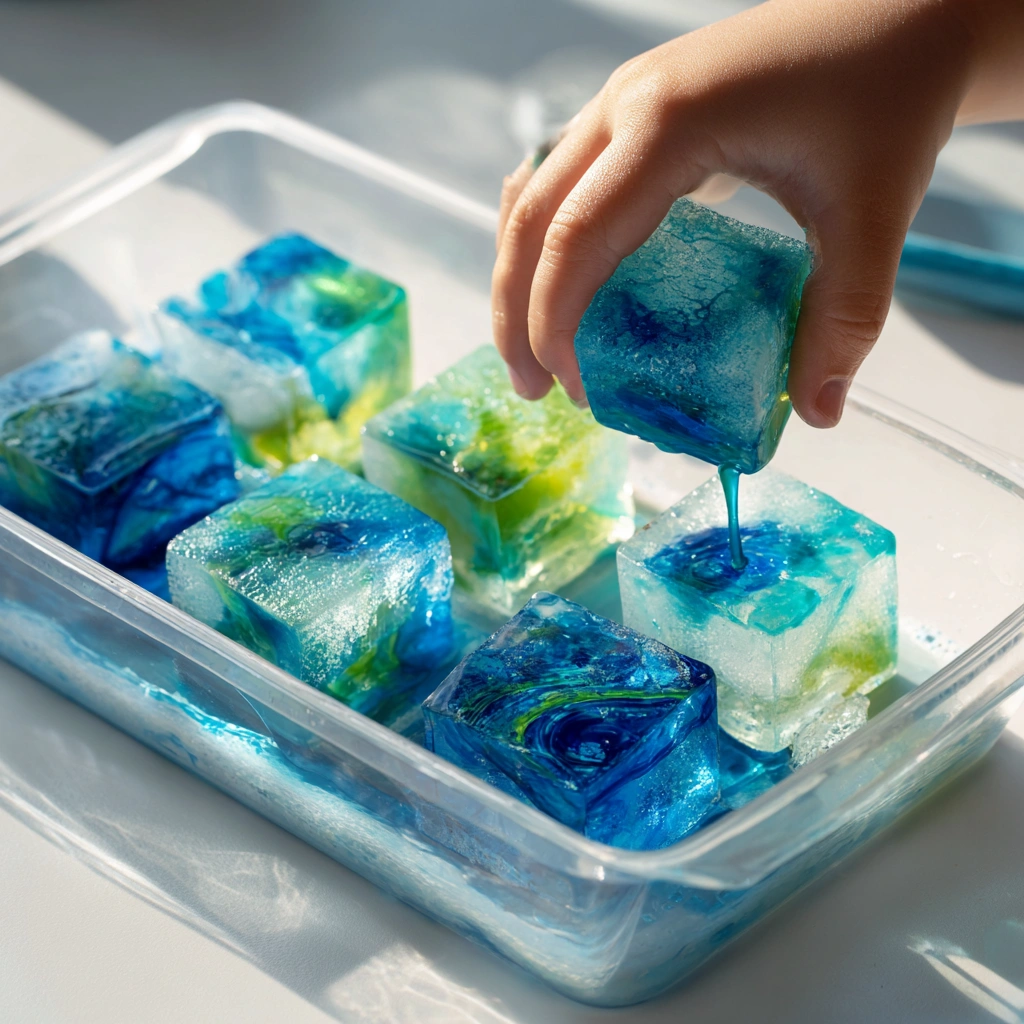
If you want to add a splash of creativity, now’s the time to drop in a few drops of food coloring. I usually go for blue and green to represent ocean water, but feel free to get wild with your color choices! As the colors swirl and mix with the ice, it’s a visual treat that sparks excitement. Plus, it’s a great way to discuss how different colors can represent various ocean environments. Imagine the vibrant hues of coral reefs or the deep blue of the ocean depths!
Step 4: Sprinkle Salt
Now comes the fun part—sprinkling salt over the ice cubes! This is where the science really kicks in. As you watch the salt hit the ice, you’ll see it start to melt almost immediately. I love explaining to the kids how salt lowers the freezing point of water, making the ice melt faster. It’s like a mini science lesson wrapped in a fun activity! You can even challenge the kids to guess how much salt will be needed for the best melting effect.
Step 5: Pour Warm Water
Next, it’s time to pour warm water over the ice cubes. As the warm water cascades down, you can almost hear the ice sighing in relief as it melts away. This is where the real magic happens! The combination of warm water and salt creates a fascinating reaction, and I can’t help but feel a sense of wonder as we watch the ice transform. Discuss with the kids how temperature plays a crucial role in melting. It’s a great way to connect this experiment to real-world ocean environments!
Step 6: Discuss and Observe
Finally, take a moment to engage with the kids about what they’re seeing. Ask them questions like, “What do you think will happen next?” or “How does the salt change the melting process?” This is a perfect opportunity to relate the experiment to ocean environments and discuss how temperature and salt affect ice melting in real life. I love seeing their eyes light up with curiosity and excitement! Encourage them to make observations and predictions throughout the process. It’s all about fostering that sense of wonder and discovery!
Tips for Best Results
- Experiment with different types of salt, like table salt and sea salt, to compare melting rates and see which one works best!
- Try using warm water at various temperatures to observe how it affects the melting speed. It’s a fun way to introduce concepts of heat transfer!
- Encourage kids to make predictions before starting the experiment. Ask them what they think will happen and why—this sparks their curiosity and critical thinking!
Theme and Design Variations
- Use blue and green food coloring to represent ocean water, creating a vibrant underwater scene that captivates the imagination.
- Create a winter theme by adding snowflake decorations around the activity, making it feel like a frosty wonderland.
- Incorporate ocean animal figurines, like dolphins or sea turtles, to enhance the learning experience and spark conversations about marine life.
- Try using glow-in-the-dark paint on the ice cubes for a magical nighttime effect, turning your experiment into a glowing ocean adventure!
- Host a themed science party where kids can dress up as their favorite ocean creatures while conducting the experiment together.
Display and Use Ideas
- Use the melted ice as a visual representation of ocean currents in a classroom, helping students understand how water movement affects marine ecosystems.
- Create a fun science display for a school project, showcasing the melting process and the effects of temperature and salt on ice.
- Gift the activity kit to friends or family for a fun science day, encouraging them to explore the wonders of the Ocean Ice Melt Activity together!
FAQs about Ocean Ice Melt Activity
- What age is this activity suitable for?This activity is suitable for children aged 5 and up, with adult supervision. It’s a fantastic way to introduce young minds to basic scientific concepts!
- Can I use different types of ice?Absolutely! You can experiment with crushed ice or larger ice blocks for different melting rates. Each type will provide a unique experience!
- Is this activity safe for kids?Yes, it is safe as long as children do not consume any materials used in the experiment. Always supervise them to ensure a fun and safe learning environment!
- How long does the Ocean Ice Melt Activity take?This engaging science project typically takes about 30 minutes, making it perfect for a quick afternoon activity or classroom experiment!
- Can I do this activity indoors?Yes! The Ocean Ice Melt Activity can be done indoors, just be sure to prepare your workspace to catch any spills. It’s a great way to bring a bit of science into your home!
Final Thoughts
Completing the Ocean Ice Melt Activity is not just about melting ice; it’s about creating lasting memories with your kids while exploring the wonders of science together. The joy of watching the colors swirl and the ice transform is truly magical! I encourage you to give this fun and educational project a try. Don’t forget to share your results and any creative twists you add along the way. Let’s inspire each other to make learning fun and engaging for our little ones. Happy crafting, and may your experiments be filled with wonder and excitement!
Print
Ocean Ice Melt Activity: Explore Fun Science at Home Today!
Description
The Ocean Ice Melt Activity is a fun and educational science project that allows kids to explore the effects of temperature on ice and learn about ocean ecosystems.
Instructions
- Fill the plastic container or tray with ice cubes.
- If desired, add a few drops of food coloring to the ice for a colorful effect.
- Sprinkle salt over the ice cubes to observe how it affects the melting process.
- Pour warm water over the ice cubes and watch the reaction as the ice melts.
- Discuss with the kids how temperature and salt affect ice melting and relate it to ocean environments.
- Category: Science Experiment
Keywords: Ocean Ice Melt Activity, science project, kids craft, ice melting experiment