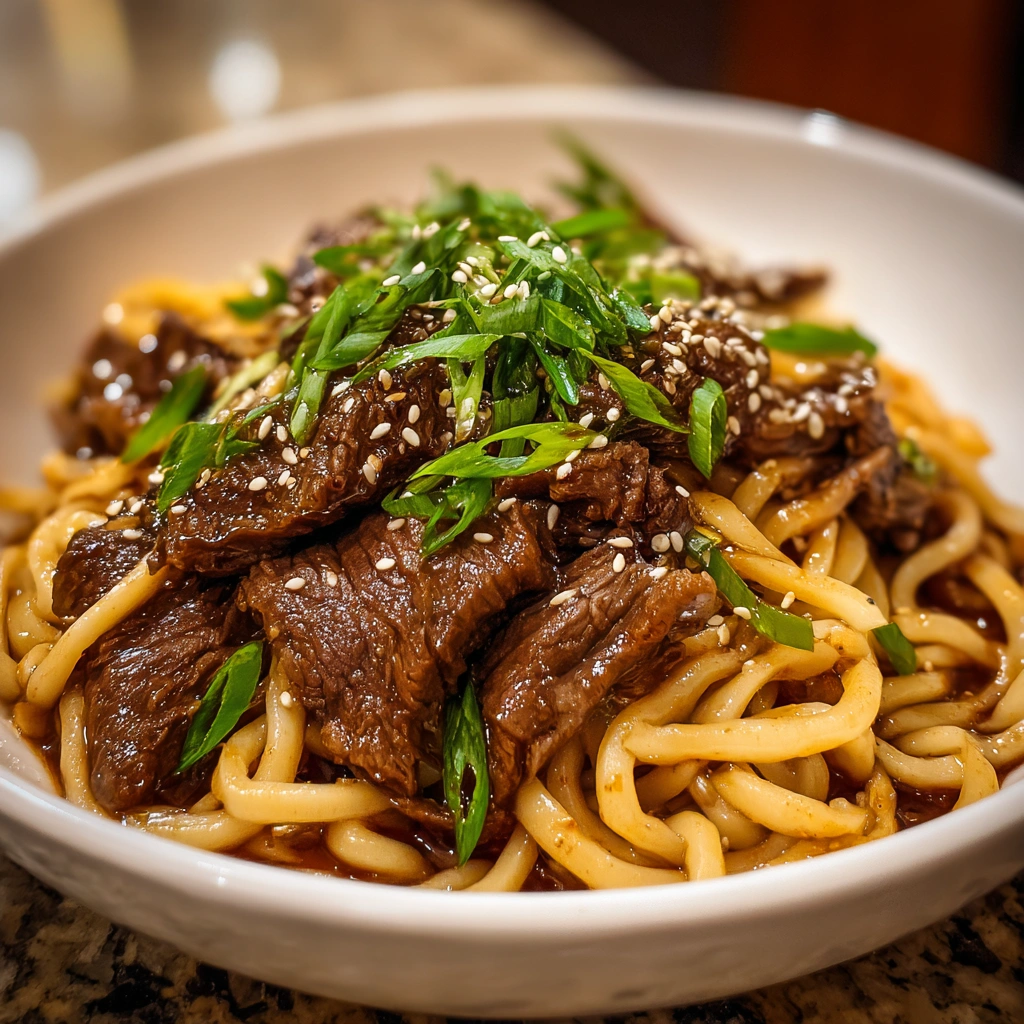
Korean Beef Noodles: Savor Juicy, Creamy Deliciousness!
Sensory-Rich Introduction with Immediate Craving
Imagine a steaming bowl of Korean Beef Noodles, where tender slices of flank steak mingle with chewy udon noodles, all enveloped in a rich, savory sauce that dances on your palate. The aroma of garlic and ginger wafts through the air, inviting you to take that first bite. This dish is not just a meal; it’s a comforting embrace on a chilly evening or a delightful centerpiece for a gathering with friends. I remember the first time I tasted this dish at a bustling Korean restaurant, the flavors igniting a passion for cooking that has only grown since. Whether it’s a cozy family dinner or a festive celebration, Korean Beef Noodles are sure to impress and satisfy.
Why You’ll Love This Korean Beef Noodles
- Texture Contrast: The combination of tender beef and chewy noodles creates a delightful mouthfeel that keeps each bite interesting.
- Flavor Balance: The umami-rich sauce, with its sweet and spicy notes, perfectly complements the savory beef and neutral noodles.
- Versatility: This dish can easily be adapted to suit various dietary preferences, making it a go-to for any occasion.
- Ease of Preparation: With a straightforward cooking process, you can whip up this dish in under an hour, perfect for busy weeknights.
- Universal Appeal: The familiar flavors of Korean cuisine make this dish a hit with both adventurous eaters and those new to Asian flavors.
Essential Tools & Preparation Strategy
- Chef’s Knife: Essential for slicing the beef thinly, ensuring optimal tenderness.
- Cutting Board: Provides a safe surface for chopping ingredients and preparing the beef.
- Mixing Bowl: Necessary for marinating the beef and mixing the sauce, allowing for even flavor distribution.
- Large Skillet: Crucial for cooking the beef evenly and allowing for proper sauce reduction.
- Colander: Used for draining the cooked noodles effectively, preventing them from becoming soggy.
- Measuring Cups and Spoons: Important for accurately measuring ingredients, ensuring the right balance of flavors.
- Tongs: Handy for tossing the noodles and beef together in the skillet without breaking them.
- Spatula: Useful for stirring and ensuring even cooking of the beef.
Ingredients & Their Roles in This Korean Beef Noodles
- Beef: 1 pound of flank steak, thinly sliced against the grain for tenderness.
- Noodles: 8 ounces of fresh udon noodles, providing a chewy base that absorbs the sauce.
- Sauce Ingredients:
- Soy Sauce: Adds depth and umami flavor.
- Gochujang: Provides a spicy kick and a hint of sweetness.
- Sesame Oil: Contributes a nutty aroma and richness.
- Sugar: Balances the savory and spicy elements.
- Garlic: Infuses the dish with aromatic flavor.
- Ginger: Adds warmth and a slight zing.
- Garnish:
- Green Onions: Offer a fresh crunch and vibrant color.
- Sesame Seeds: Enhance the dish with a nutty finish.
Step-by-Step Guide to Perfect Korean Beef Noodles
- Prepare the Marinade: In a bowl, mix together soy sauce, gochujang, sesame oil, sugar, garlic, and ginger.
- Marinate the Beef: Add the sliced beef to the marinade, ensuring it’s well-coated. Let it sit for at least 30 minutes to absorb the flavors.
- Cook the Noodles: While the beef marinates, cook the udon noodles according to package instructions. Drain and set aside.
- Heat the Skillet: In a large skillet, heat a tablespoon of oil over medium-high heat.
- Cook the Beef: Add the marinated beef to the skillet and cook for 5-7 minutes until browned and cooked through.
- Combine Noodles and Beef: Add the cooked udon noodles to the skillet, tossing to combine with the beef and sauce. Cook for an additional 2-3 minutes until heated through.
- Garnish and Serve: Remove from heat and garnish with chopped green onions and sesame seeds before serving.
Chef’s Notes & Pro Tips for Flawless Results
- Make-Ahead Instructions: This dish can be prepared in advance; store the cooked noodles and beef separately in airtight containers in the refrigerator for up to 3 days.
- Reheating: Warm the beef in a skillet and add the noodles until heated through for best results.
- Vegetarian Option: Substitute beef with tofu or mushrooms for a delicious plant-based alternative.
- Flavor Adjustments: Feel free to tweak the amount of gochujang based on your spice preference.
Avoid These Common Cooking Mistakes
- Not Slicing Against the Grain: This can result in tough meat. Always slice against the grain for tenderness.
- Overcooking the Beef: This can lead to dry meat. Cook just until browned and no longer pink.
- Using Too Much Gochujang: This can make the dish overly spicy. Start with less and adjust to taste.
- Not Marinating Long Enough: Insufficient marination can lead to bland beef. Aim for at least 30 minutes.
- Overcooking the Noodles: This can make them mushy. Follow package instructions closely.
- Skipping the Garnish: This can result in a lack of freshness. Always add green onions and sesame seeds for flavor.
- Not Balancing Flavors: This can lead to a one-dimensional dish. Taste and adjust seasoning as needed.
Creative Variations & Customizations
- Spicy Korean Beef Noodles: Add more gochujang or a sprinkle of red pepper flakes for extra heat.
- Vegetable-Loaded Version: Incorporate bell peppers, carrots, and snap peas for added nutrition and color.
- Gluten-Free Option: Use gluten-free udon noodles or rice noodles to accommodate dietary restrictions.
- Cold Noodle Salad: Chill the dish and serve it cold with a drizzle of sesame dressing for a refreshing summer meal.
- Korean BBQ Style: Grill the marinated beef instead of stir-frying for a smoky flavor.
Perfect Pairings: What to Serve With Korean Beef Noodles
- Kimchi: A spicy, tangy contrast that complements the richness of the noodles.
- Cucumber Salad: A light, refreshing side that balances the dish’s flavors.
- Fried Egg: Topping the noodles with a fried egg adds richness and texture.
- Steamed Bok Choy: A nutritious addition that enhances the meal’s health profile.
- Pickled Radishes: Their crunch and acidity provide a refreshing contrast.
- Cold Beer or Soju: These beverages enhance the flavors of the beef and noodles.
- Fruity White Wine: A light wine can elevate the dining experience.
- Rice: Serve with rice for a heartier meal option.
Storage & Meal Prep Instructions
- Refrigeration: Store cooked noodles and beef separately in airtight containers for up to 3 days.
- Freezing: For longer storage, freeze the beef and sauce mixture in a freezer-safe container for up to 2 months.
- Reheating: Thaw overnight in the refrigerator, then reheat in a skillet over medium heat, adding a splash of water or broth to prevent drying out.
Nutrition Facts & Health Insights
| Nutrient | Amount per Serving |
|---|---|
| Calories | 550 |
| Sugar | 6 grams |
| Sodium | 1200 milligrams |
| Fat | 20 grams |
| Saturated Fat | 4 grams |
| Unsaturated Fat | 14 grams |
| Trans Fat | 0 grams |
| Carbohydrates | 70 grams |
| Fiber | 3 grams |
| Protein | 30 grams |
| Cholesterol | 70 milligrams |
Health Insights: The beef provides a rich source of protein, while the udon noodles offer carbohydrates for energy. Gochujang contains beneficial probiotics, and the addition of vegetables can enhance the dish’s nutritional profile.
Frequently Asked Questions
- Can I use a different type of meat? Yes, chicken or pork can be substituted for beef.
- What if I don’t have gochujang? You can use sriracha or another chili paste, but the flavor will differ.
- How long can I marinate the beef? Marinating for up to 24 hours is fine, but avoid longer to prevent mushiness.
- Can I make this dish vegetarian? Absolutely! Substitute beef with tofu or mushrooms.
- What type of noodles can I use? Udon is traditional, but rice noodles or soba can also work.
- How do I store leftovers? Store in airtight containers in the fridge for up to 3 days.
- Can I freeze this dish? Yes, freeze the beef and sauce mixture for up to 2 months.
- What can I do if the sauce is too salty? Add a bit of sugar or a splash of vinegar to balance the flavors.
Final Inspiration & Kitchen Confidence
Cooking Korean Beef Noodles is not just about following a recipe; it’s about creating a dish that brings joy and satisfaction to your table. Embrace the process, celebrate your culinary achievements, and don’t hesitate to make this dish your own. With each bite, you’ll gain confidence in your cooking skills and a deeper appreciation for the flavors of Korean cuisine. So gather your ingredients, roll up your sleeves, and let the delicious journey begin!
Print
Korean Beef Noodles: Savor Juicy, Creamy Deliciousness!
- Total Time: 45 minutes
- Yield: 4 servings 1x
- Diet: Gluten-Free (if using gluten-free noodles)
Description
Korean Beef Noodles are a delightful fusion of tender beef and chewy noodles, enveloped in a rich, savory sauce that tantalizes the taste buds. The dish is finished with a sprinkle of sesame seeds and green onions, adding a fresh crunch that complements the creamy texture of the sauce.
Ingredients
- Beef: 1 pound of flank steak, thinly sliced against the grain
- Noodles: 8 ounces of fresh udon noodles
- Sauce:
- 1/4 cup soy sauce
- 2 tablespoons gochujang (Korean chili paste)
- 2 tablespoons sesame oil
- 1 tablespoon sugar
- 2 cloves garlic, minced
- 1 teaspoon ginger, grated
- Garnish:
- 2 green onions, chopped
- 1 tablespoon sesame seeds
Instructions
- In a bowl, mix together soy sauce, gochujang, sesame oil, sugar, garlic, and ginger to create the marinade.
- Add the sliced beef to the marinade and let it sit for at least 30 minutes.
- While the beef marinates, cook the udon noodles according to package instructions, then drain and set aside.
- In a large skillet, heat a tablespoon of oil over medium-high heat. Add the marinated beef and cook for 5-7 minutes until browned and cooked through.
- Add the cooked udon noodles to the skillet and toss to combine with the beef and sauce, cooking for an additional 2-3 minutes until heated through.
- Remove from heat and garnish with chopped green onions and sesame seeds before serving.
Notes
- This dish can be made ahead of time; simply store the cooked noodles and beef separately in airtight containers in the refrigerator for up to 3 days.
- To reheat, warm the beef in a skillet and add the noodles until heated through.
- For a vegetarian option, substitute beef with tofu or mushrooms.
- Prep Time: 30 minutes
- Cook Time: 15 minutes
- Category: main-dish
- Method: stir-frying
- Cuisine: Korean
Nutrition
- Serving Size: 1 plate of noodles with beef and sauce
- Calories: 550
- Sugar: 6 grams
- Sodium: 1200 milligrams
- Fat: 20 grams
- Saturated Fat: 4 grams
- Unsaturated Fat: 14 grams
- Trans Fat: 0 grams
- Carbohydrates: 70 grams
- Fiber: 3 grams
- Protein: 30 grams
- Cholesterol: 70 milligrams
Keywords: Korean Beef Noodles, Korean cuisine, beef stir-fry, udon noodles, gochujang, savory noodles, Asian recipes, quick dinner, comfort food, marinated beef, easy recipes, noodle dishes, gluten-free options, flavorful meals, homemade Korean food